
The Battle Between Heaven and Hell Explained

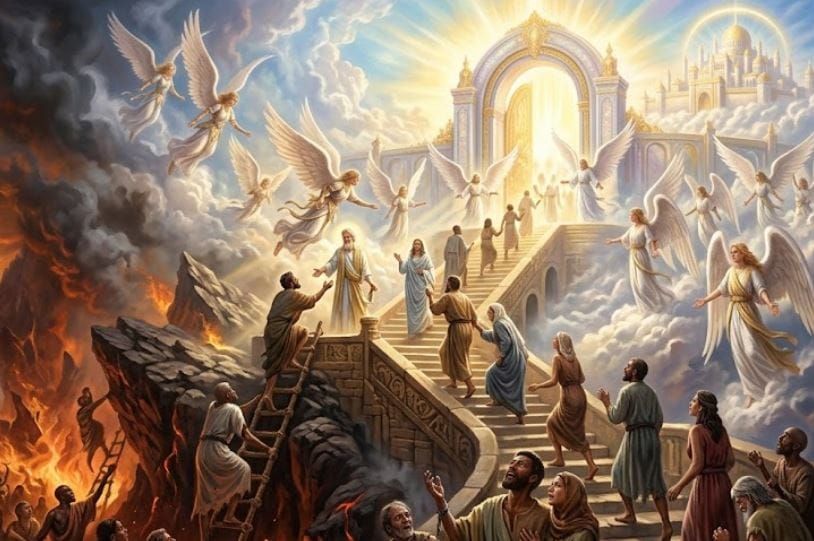
For centuries, people have tried to understand the struggle between good and evil, truth and deception, peace and chaos. This topic shows up in religion, philosophy, politics, and everyday life because it speaks to a question almost everyone asks at some point: why is the world so divided? In simple terms, the idea of heaven and hell is often used to describe two very different ways of living and two very different directions for the human soul.
Why This Matters
A lot of people get stuck focusing only on small events, but the bigger picture is usually more important. When people only look at the surface, they miss the patterns behind behavior, belief, and power. The battle between heaven and hell is one way of describing that bigger picture: one side represents love, truth, order, and life, while the other represents fear, confusion, pride, and destruction.
This idea is not just about a place after death. For many people, it is also about what kind of energy rules a person’s life right now. A “heavenly” life is one guided by conscience, compassion, and connection to God. A “hellish” life is one driven by selfishness, anger, addiction, and separation from what is good.
What Heaven Means
In Christian teaching, heaven is usually understood as the place where God’s presence is fully known and experienced. It is described as a place of peace, holiness, and life with God. Some Bible teachers also explain heaven as the destination of the faithful after death, though different Christian groups explain the details in different ways.
But heaven is not only about a location in the sky. It can also mean a state of being. When a person becomes more loving, more honest, and more spiritually awake, that person starts to live in a more “heavenly” way. In other words, heaven is not just somewhere you go later; it is also something you begin to reflect now.
What Hell Means
Hell is usually described as the opposite of heaven. It stands for separation from God, separation from truth, and the consequences of choosing darkness over light. Some Christian sources explain hell as the final place of punishment for the wicked, while others emphasize that biblical language about hell can be symbolic and layered.
In plain English, hell can be understood as the result of staying trapped in hatred, pride, selfishness, and lies. When a person or society keeps choosing those things, the result is suffering. That suffering may begin inside a person long before any final judgment is imagined.
Lucifer and Rebellion
Many people connect the battle between heaven and hell with the story of Lucifer. In Christian teaching, Lucifer is often described as a magnificent angel who became proud and rebelled against God. This rebellion is usually seen as the beginning of spiritual corruption, where beauty turned into arrogance and service turned into domination.
The larger lesson in this story is simple: pride can destroy even the most gifted being. When someone wants power more than truth, that person begins to lose clarity. Over time, the mind becomes twisted, and what once seemed noble can become destructive.
Why People Follow Darkness
One reason dark systems gain power is that people are often weak, confused, or desperate when they are manipulated. Throughout history, leaders, cults, and institutions have used fear to control others. When people are afraid, they are easier to mislead, and once they accept lies long enough, those lies can become normal.
This is why many spiritual traditions warn against ignorance. The more people understand, the harder it is to control them. A person who knows the difference between truth and deception is much less likely to be trapped by fear-based systems.
Moses and Change
In the Bible, Moses is seen as a major figure who helped his people move away from idol worship and toward devotion to one God. This was a major turning point because it challenged the idea that power belonged to many competing forces. Instead, it pointed people toward a single source of truth, justice, and moral law.
That shift mattered because it gave people a clearer spiritual standard. Rather than following every loud voice or powerful ruler, they were taught to measure everything against God’s truth. That idea still matters today because it reminds people not to confuse influence with righteousness.
Jesus and Love
Jesus brought a message that changed how many people think about God. Instead of presenting God as a tyrant to be feared, Jesus emphasized love, mercy, forgiveness, and inner transformation. In Christian belief, Jesus also showed what it looks like for a human life to be fully aligned with God’s will.
Some modern spiritual writers use the phrase “Christ consciousness” to describe a higher state of awareness centered on love and unity. Traditional Christian teaching is more cautious about that term, but even so, the basic idea is that Jesus modeled a way of living that rises above ego and selfishness.
The World Today
Many people today feel that the world is still caught in a struggle between light and darkness. They see corruption in politics, manipulation in media, greed in business, and cruelty in culture. Whether someone explains these problems in spiritual terms or practical terms, the result is the same: people feel that something is deeply out of balance.
At the same time, there is also evidence of growth. More people than ever are questioning lies, looking for meaning, and trying to live with more compassion. That does not mean the struggle is over, but it does suggest that awareness is spreading.
Why Fear Loses
Fear is powerful, but it does not last forever. When people learn to think clearly, tell the truth, and act with courage, fear begins to lose its grip. This is why spiritual teachings often focus on repentance, wisdom, and transformation instead of just punishment. The goal is not only to avoid evil, but to become strong enough to choose good freely.
A person can think of this like a battle inside the mind. One voice says, “Hide, hate, and control.” The other says, “Tell the truth, forgive, and build.” The first path leads downward. The second path leads upward.
The Real Battle
At its core, the battle between heaven and hell is not just about distant places or dramatic supernatural stories. It is about what rules the heart. Heaven grows wherever truth, love, humility, and peace are allowed to take root. Hell grows wherever pride, fear, deception, and hatred are given control.
That is why this subject matters so much. It is not just a religious idea; it is a map of human life. Every choice pushes a person a little closer to light or a little closer to darkness. Over time, those choices shape not only the individual, but also families, communities, and nations.
Final Thought
The battle between heaven and hell can be understood as the battle between truth and illusion, love and fear, humility and pride. In that sense, the answer is not just something to believe in theory. It is something to live out every day through the choices we make, the words we speak, and the values we follow.